
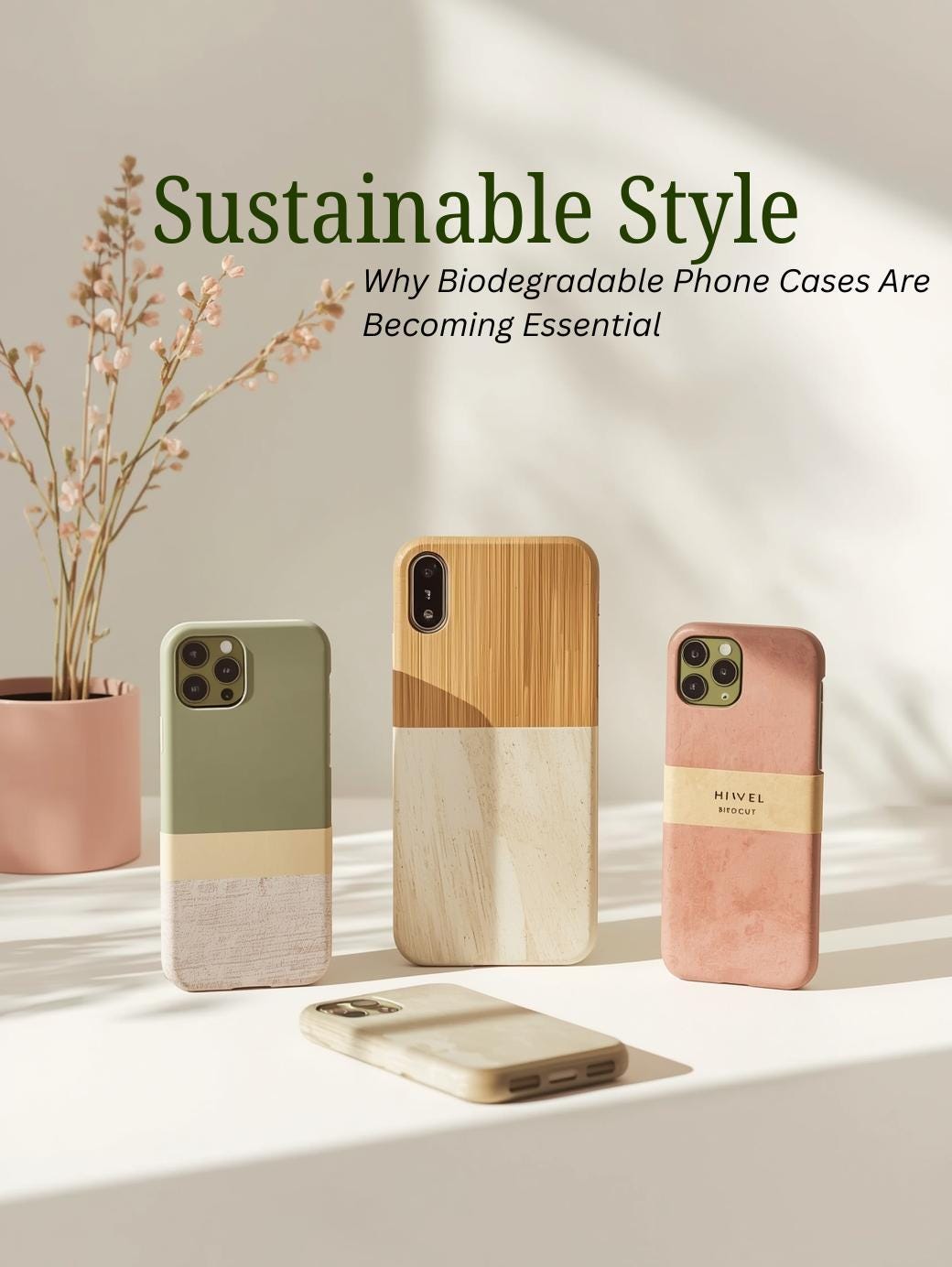
Smartphones have become an extension of our daily lives — but the accessories we use to protect them come with a hidden environmental cost. Every year, hundreds of millions of plastic phone cases are produced, purchased, and eventually discarded, contributing to a growing global pollution crisis. As eco-conscious consumers demand better alternatives, biodegradable phone cases are emerging as the future of sustainable tech.
This article explores the environmental impact of traditional plastic cases, the science behind biodegradable alternatives, and why these eco-friendly options are poised to dominate the market.
The Hidden Pollution Behind Traditional Plastic Phone Cases
1. Massive Waste Generation
More than 400 million phone cases are purchased annually, and most are made from petroleum-based plastics like polycarbonate, TPU, and silicone. These materials are non-biodegradable and can take hundreds to even 1,000 years to decompose.
2. Microplastic Pollution From Daily Use
Plastic phone cases don’t just pollute when thrown away — they shed microplastics during everyday wear and tear, releasing microscopic particles into soil, waterways, and even the food chain. This means every swipe, grip, or drop contributes to long-term environmental contamination.
3. High Carbon Footprint and Toxic Manufacturing
The production of plastic cases requires:
• Petroleum extraction
• Chemical refining
• High-energy manufacturing
These processes release significant greenhouse gases and introduce toxic chemicals into air and water systems.
Some plastic cases also contain:
• BPA and phthalates (endocrine disruptors)
• PVC (toxic additives)
• Flame retardants linked to health concerns
4. Ocean Pollution and Wildlife Harm
Millions of discarded cases end up in oceans each year, where plastic fragments are mistaken for food by marine animals, causing injury or death.
Biodegradable phone cases offer a sustainable alternative without sacrificing durability or style. Here’s why they’re rapidly becoming the preferred choice for eco-conscious consumers and brands.
Made From Renewable, Plant-Based Materials
Biodegradable cases are crafted from:
• Bamboo fiber
• Wheat straw
• Plant-based polymers (cellulose, starch, PLA)
• Flax shive
• Cornstarch composites
These materials are renewable, non-toxic, and significantly reduce reliance on fossil fuels.
Rapid Decomposition Compared to Plastic
Under industrial composting conditions, biodegradable cases can break down in 6–12 months.
Some bamboo-based cases decompose in as little as 60–90 days.
Even in home composting environments, they typically degrade within 6–24 months, returning to the earth as organic matter rather than microplastics.
Lower Carbon Footprint
Manufacturing biodegradable cases produces up to 60% fewer carbon emissions compared to traditional plastic cases. This reduction comes from:
• Lower energy requirements
• Renewable raw materials
• Cleaner production processes
Zero Microplastic Pollution
Unlike plastic, biodegradable materials do not fragment into microplastics. Instead, they break down into harmless organic compounds that enrich soil rather than pollute it.
Health-Safe and Chemical-Free
Biodegradable cases are typically free from:
• BPA
• Phthalates
• PVC
• Toxic flame retardants
This makes them safer for both consumers and the environment.
Supporting a Circular Economy
Some eco-friendly brands repurpose:
• Old plastics
• Fishing nets
• Recycled materials
This reduces landfill waste and supports a circular economy where materials are reused rather than discarded.
Growing Consumer Demand and Brand Adoption
Top sustainable brands like Pela, CASETiFY, and EcoBlvd are leading the shift:
• Pela has prevented over 313,528 pounds of plastic waste
• CASETiFY has recycled over 60,000 kg of plastic since 2023
As awareness grows, more consumers are choosing biodegradable options — pushing the industry toward greener innovation.
Why Biodegradable Phone Cases Will Dominate the Future
The shift toward biodegradable phone cases isn’t a trend — it’s a necessary evolution driven by:
• Environmental urgency
• Consumer demand for sustainable products
• Corporate responsibility and ESG goals
• Advances in plant-based materials
• Global pressure to reduce plastic waste
With billions of smartphones in circulation and millions of cases discarded each year, biodegradable options offer a practical, scalable solution to a massive pollution problem.
Switching to a biodegradable phone case is one of the simplest ways to reduce your environmental footprint. It’s a small, everyday choice that helps combat plastic pollution, supports sustainable manufacturing, and protects both the planet and your health.
As more consumers embrace eco-friendly tech accessories, biodegradable phone cases are set to become the new standard — not just an alternative.
Shop Biodegradable Phone Cases at D3zignCave